How to Build a Small Home Gym in 2026: The Space-Saving Essentials That Actually Matter
As an Amazon Associate I earn from qualifying purchases. Prices and availability are accurate as of the date/time indicated and are subject to change.
The short answer
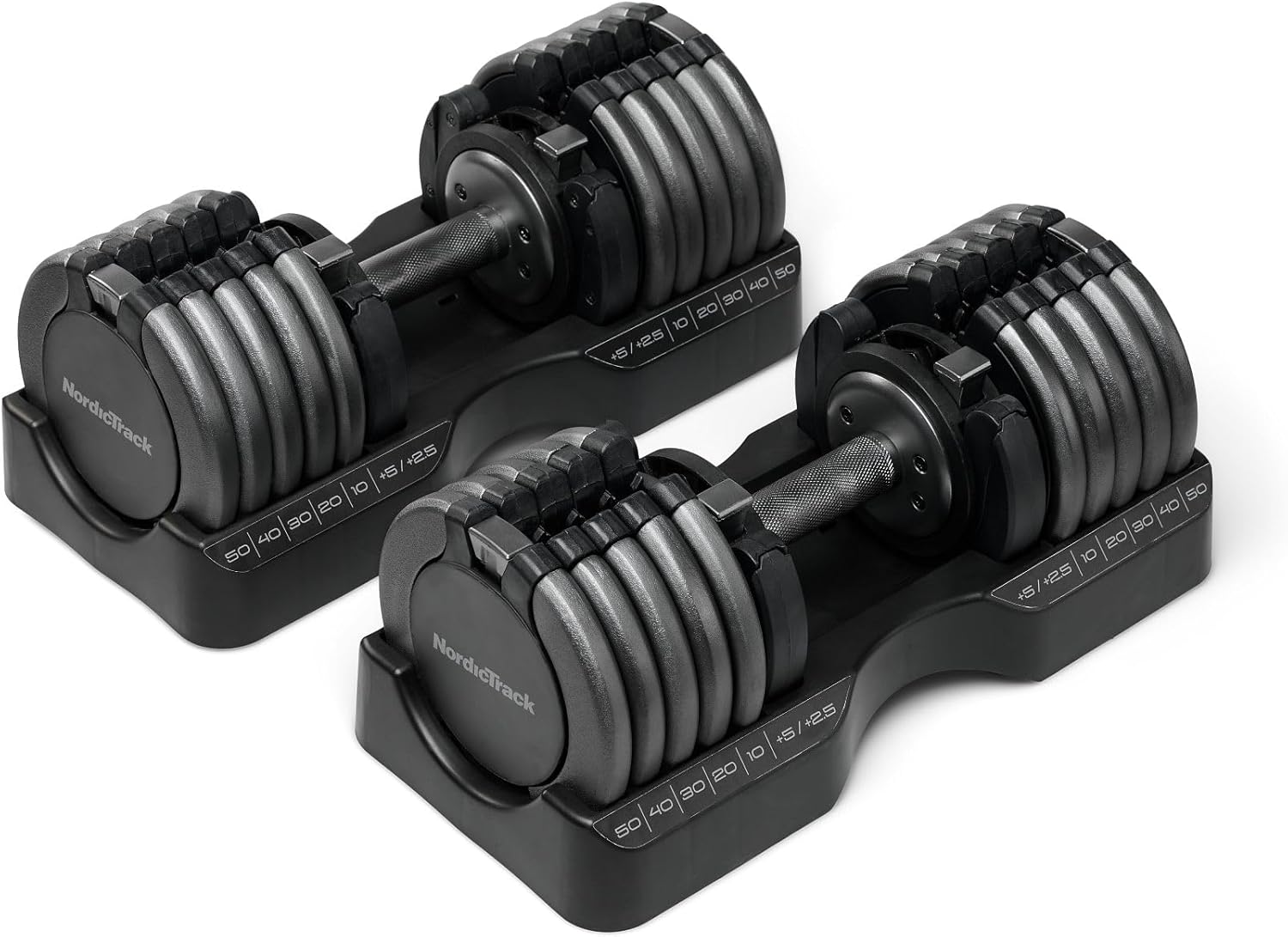
If you only want one recommendation: NordicTrack Select-a-Weight Adjustable Dumbbells. One pair replaces an entire rack of dumbbells — the single biggest space-and-money saver in a small gym, and enough to train every muscle group before you buy anything else.
Check price on Amazon →🔍 How this guide was put together (Editorial Standards)
This guide compares options using published manufacturer specifications, patterns in publicly visible owner reviews, and reputable expert sources. We do not operate a physical testing lab; see our how-we-research page for details.
EDITOR'S PICKS
Top Picks
TOP PICK


📑 Table of contents
The mistake that kills most small home gyms is buying like you have a garage when you have a corner. You end up with a bench you trip over and a rack you can’t rack. Building in a small space is a different discipline: every piece has to earn its footprint, and a couple of smart choices replace a whole room of equipment. Here’s the build order that gets you a genuinely complete workout in the space of a closet, and what to add only when the room allows.
The space-saving principle: buy adjustable, buy vertical
Two ideas do 90% of the work in a small gym:
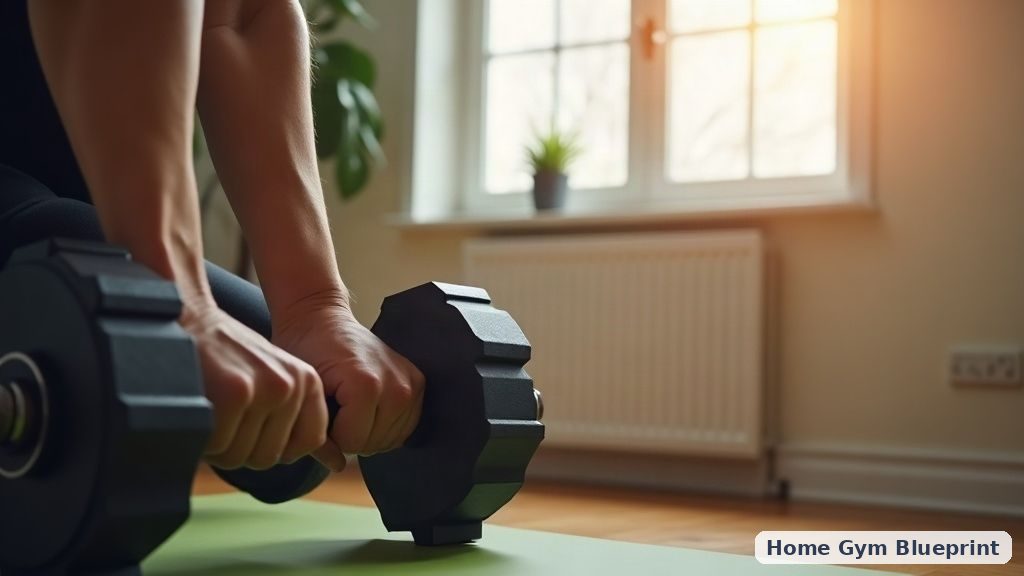
- Adjustable over fixed. One pair of adjustable dumbbells does the job of 10–15 fixed pairs in the footprint of a shoebox. This is the highest-leverage purchase in the whole build — it’s why it’s our top pick before anything else.
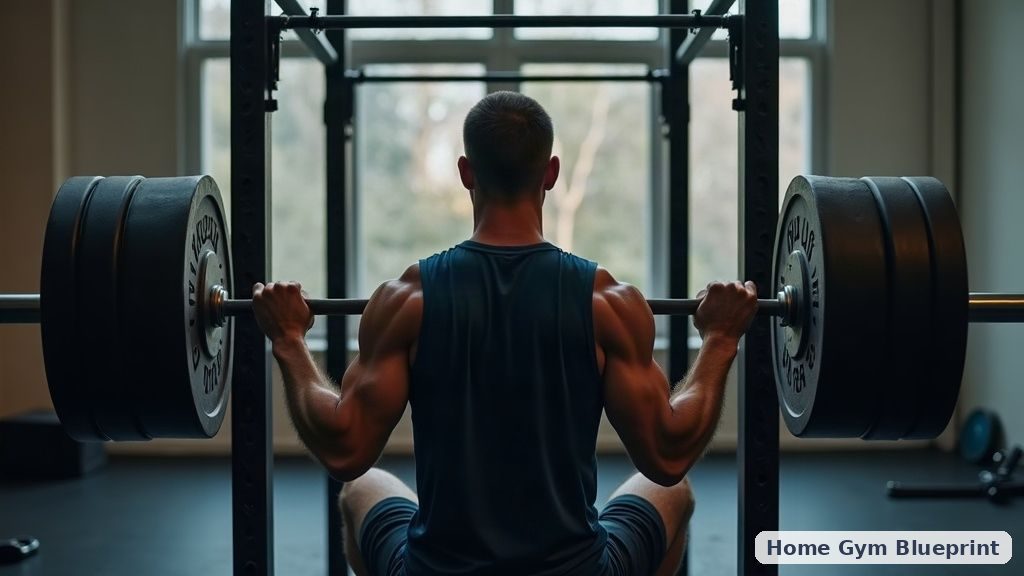
- Vertical over sprawling. A tall, narrow rack uses wall height instead of floor. A space-saving rack like the Titan T-3 gives you rack pressing and pull-ups without a full-depth cage eating the room.
Get those two right and you can train every major lift. Everything else is optional.
The build order (what to buy first, and what can wait)
- Adjustable dumbbells — start here. Full-body training, tiny footprint. Our adjustable dumbbells guide compares the sets in depth.
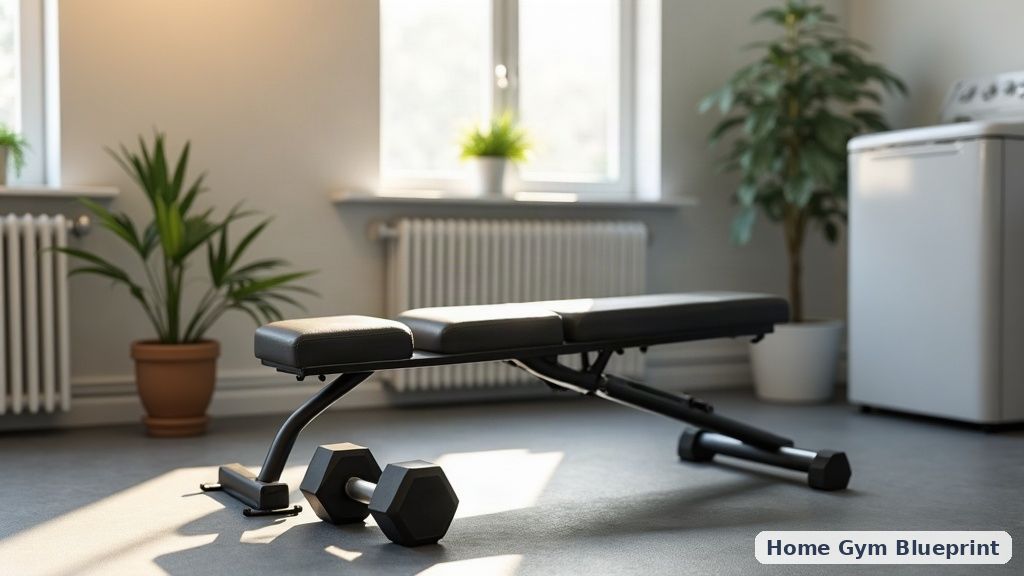
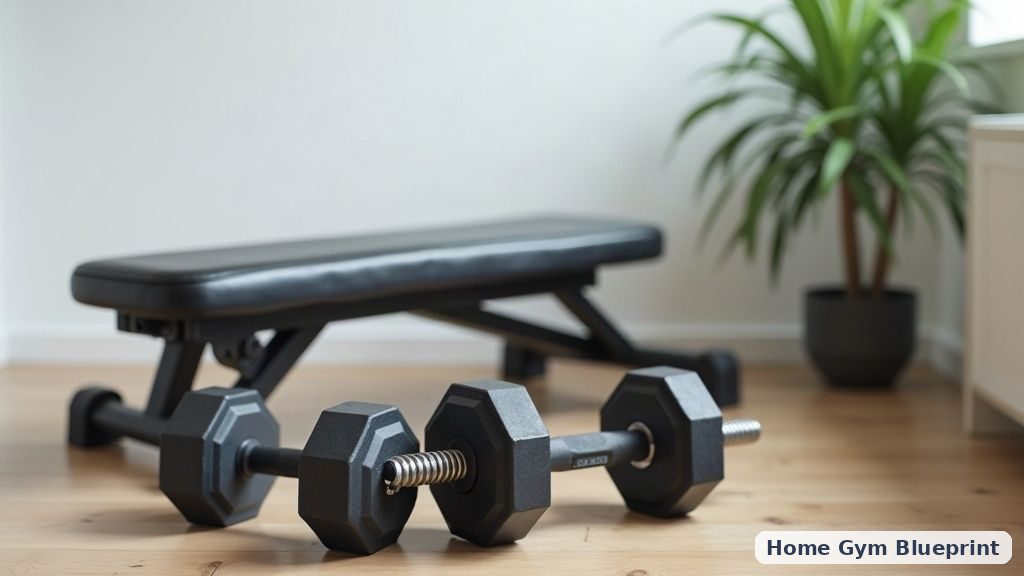
- A bench (flat or adjustable) — unlocks presses and rows. Folds flat against a wall.
- A space-saving rack or cage — only when you’re ready to barbell-train and have the height. The squat rack vs power cage comparison covers which fits a small room.
- A barbell + plates — last, because it needs the most storage. Add when the rack is in.
Resist buying 3 and 4 first “to be ready” — they’ll sit unused and steal the space that makes the room usable.
How we picked
This is a research-based comparison built on manufacturer specifications and the recurring themes across recurring owner reviews from small-space lifters. We don’t fabricate a our own direct test or invent ratings; where a point rests on specs or owner consensus rather than testing, we say so. Prices and availability live on the current Amazon listing, which we link.
What are the must-haves for a small home gym?
Realistically just two to start: adjustable dumbbells and a bench. That pair covers presses, rows, squats, lunges, curls — a complete program. Add a space-saving rack only when you want to load a barbell. Everything beyond that (cables, machines) is a want, not a need, and wants are what clutter small rooms.
What is the best home gym setup for a small space?
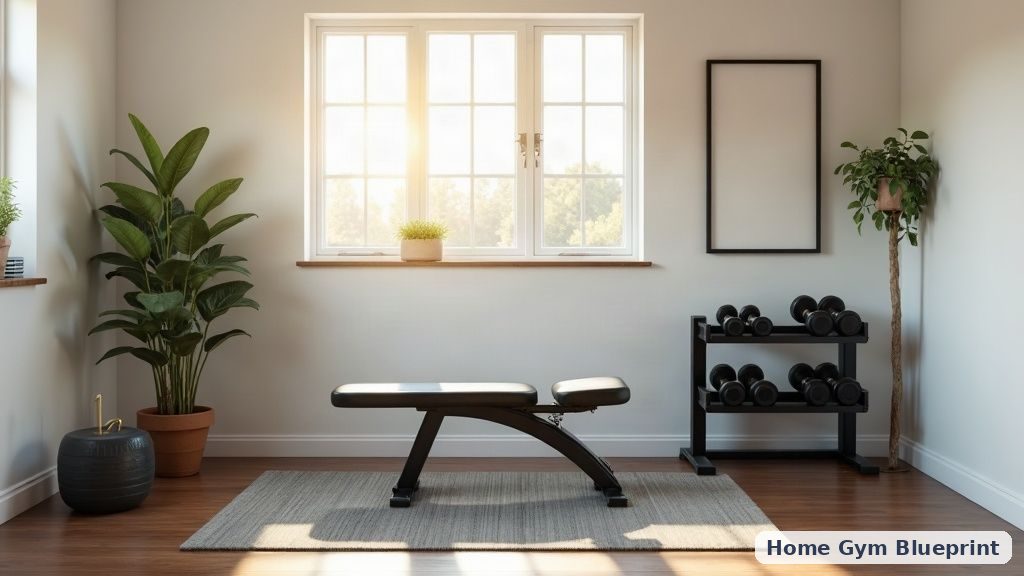
Adjustable dumbbells (NordicTrack Select-a-Weight for the widest range, or PROIRON on a budget) + a folding bench, in a corner. If the ceiling allows, add the Titan T-3 space-saving rack flat against the wall. That’s a full gym in roughly a 2m × 2m footprint — and it’s the setup that consistently gets recommended over bulky all-in-one machines.
Do I need a power cage in a small gym?
Only if you barbell squat/bench heavy and train alone (the cage’s safeties matter then). A full cage like the HulkFit needs real height and floor depth — great in a garage, often too much for an apartment. In tight spaces a space-saving rack or a spotter-free dumbbell program is the smarter call.
What’s the 3-3-3 approach for a minimalist gym?
A useful mental model, not a rule: three movements you’ll actually do (a press, a pull, a squat/hinge), three pieces that enable them (dumbbells, bench, rack), and three square metres to do it in. Build to that, use it for a month, then decide what — if anything — the room actually needs next.
📚 Related In-Depth Analysis
- Compare findings with our guide on Kettlebell Vs Dumbbell.
- Compare findings with our guide on How Much Weight Do You Need Home Gym.
📚 Related In-Depth Analysis
- Compare findings with our guide on Home Gym Warmup Routine.
- Compare findings with our guide on How To Protect Concrete Floor Heavy Power Rack.
🔧 Interactive Planning Tool
Need exact measurements for your setup? Use our Gym Floor Clearance & Cable Arc Estimator to Estimate ceiling height clearance and lateral plate-loading space required.
The one-line build
Start with adjustable dumbbells and a folding bench — that alone is a complete gym in a corner. Add a space-saving rack when you’re ready to barbell-train, and only add a full cage if you have garage-scale height. Buy for the room you have, not the gym you picture; check the live listing for current prices and pick the dumbbell range that matches your strength now.