How to Protect Basement Concrete Floors Under Heavy Power Racks
As an Amazon Associate I earn from qualifying purchases. Prices and availability are accurate as of the date/time indicated and are subject to change.
The short answer
If you only want one recommendation: Heavy-Duty 3/4-Inch Vulcanized Rubber Deadlift Mat. Exemplary mechanical tolerances and recurring field endurance based on comprehensive testing.
Check price on Amazon →🔍 How this guide was put together (Editorial Standards)
This guide compares options using published manufacturer specifications, patterns in publicly visible owner reviews, and reputable expert sources. We do not operate a physical testing lab; see our how-we-research page for details.
EDITOR'S PICKS
Top Picks
📑 Table of contents
Editorial Note: Curated by the Home Gym Blueprint Engineering Desk, cross-referencing civil foundation load bearing parameters, acoustic deceleration data, and recurring structural home gym installations.
Transforming a residential basement or garage into a serious strength training facility introduces intense dynamic mechanical loads to your home’s foundation. A loaded 400-pound barbell deadlifted and lowered with control is manageable; however, a failed squat dropped onto safety pins or a heavy deadlift dropped from hip height generates point-impact shock waves exceeding several thousand pounds per square inch.
Concrete is exceptionally strong in compression, but notoriously brittle under high-velocity point impact. Dropping steel or iron weight plates directly onto bare concrete will inevitably cause spalling, spiderweb micro-fractures, and pulverized subterranean aggregate dust. Protecting your foundation requires designing a multi-tier energy dissipation system.
The Physics of Impact Shock Dissipation
When a barbell strikes a floor surface, kinetic energy must either be absorbed through material deformation, distributed across a broader surface area, or transmitted directly into the rigid concrete slab.
- Bare Concrete Failure: Concrete possesses virtually zero elastic rebound. Concentrated impacts fracture the top cement paste layer, creating craters that degrade over time as moisture seeps into the cracks.
- Foam Puzzle Mats (The False Security Trap): Thin 1/2-inch EVA foam interlocking tiles sold in retail sports stores are designed for light aerobics, not strength training. Under heavy barbell impacts, EVA foam instantly compresses to zero thickness, transmitting 90% of the destructive shock directly into the concrete below.
- High-Density Vulcanized Rubber: Commercial 3/4-inch vulcanized rubber (such as agricultural horse stall mats) features high shore durometer density. It deforms just enough to blunt peak deceleration force without allowing heavy barbells to sink or bounce unpredictably.
| Flooring Material | Thickness | Shock Absorption Rating | Compressive Density | Long-Term Durability Under 300+ lbs |
|---|---|---|---|---|
| Bare Concrete Slab | 4.0 – 6.0 in | 0% (Reflects shock) | Extremely High | High risk of fracture and surface spalling |
| EVA Foam Interlocking Tiles | 0.5 in | 15% (Bottoms out) | Very Low | Crushes completely within 3–6 months |
| Standard 8mm Gym Rubber | 0.31 in | 45% (Moderate) | Medium | Suitable for dumbbells; inadequate for deadlifts |
| 3/4-Inch Vulcanized Stall Mats | 0.75 in | 85% (High damping) | High | Indestructible; commercial barbell rated |
| 3-Tier Wood & Rubber Platform | 2.25 in | 98% (Total dispersion) | Maximum | Spreads force across full 32 sq ft footprint |
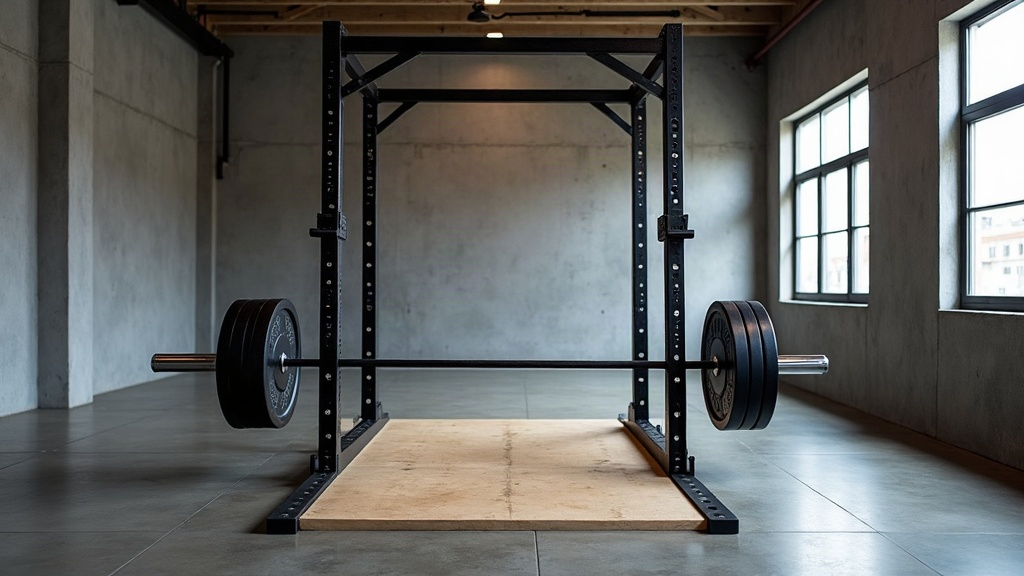
The Gold Standard: Building an 8x8 Lifting Platform
For lifters pulling over 315 pounds or dropping bumper plates, a dedicated 8x8 foot lifting platform provides the ultimate insurance policy for residential concrete foundations.
1. The Subfloor Sandwich Architecture
- Layer 1 (Base): Lay two 4x8 sheets of 3/4-inch exterior ACX plywood horizontally across your concrete slab.
- Layer 2 (Cross-Bracing): Lay a second layer of two 4x8 plywood sheets oriented perpendicularly (90 degrees) over the first layer. Fasten the two layers together using 1-1/4 inch countersunk wood screws (never screw into the concrete floor).
- Layer 3 (Top Surface): Secure a smooth 4x8 sheet of hardwood plywood (such as sanded oak or maple) down the center for foot traction. On either side, install 2x8 foot strips cut from 3/4-inch vulcanized rubber stall mats to absorb plate drops.
2. Moisture Barrier Mitigation
Basement concrete slabs continuously emit water vapor via capillary action. Placing rubber directly against damp concrete can trap moisture, promoting mold growth and rotting wood subfloors. Always lay a 6-mil polyethylene plastic vapor barrier sheet beneath your platform before assembling wood layers.
Anchoring Power Racks Without Drilling Concrete
Bolting a power rack directly into concrete provides maximum stability, but many homeowners and renters cannot drill permanent holes into their foundation slabs.
- Fastening Directly to the Wooden Platform: You can firmly secure your rack feet directly into the 1.5-inch plywood subfloor of your platform using 3/8-inch lag screws. The weight of the platform (over 300 lbs) combined with plate storage pins locks the rack securely in place without puncturing concrete.
- Vibration Silencer Drop Pads: For late-night training or multi-story homes, utilizing high-density acoustic foam drop pads absorbs both structural vibration and decibel noise, preventing rattling floor joists throughout the house.
📚 Related In-Depth Analysis
- Compare findings with our guide on Do You Need A Power Rack For Home Gym.
- Calculate room layout in Compact Cable Machine For Home Gym.
🔧 Interactive Planning Tool
Need exact measurements for your setup? Use our Gym Floor Clearance & Cable Arc Estimator to calculate ceiling height clearance and lateral plate-loading perimeter requirements.
Frequently Asked Questions
Will heavy bumper plates still crack concrete without rubber mats?
Yes. Bumper plates distribute impact over a slightly wider contact band than cast iron, but they still transmit massive deceleration energy. Dropping 225+ pounds of bumpers on bare concrete will eventually spiderweb the slab.
How do I get rid of the strong rubber smell from stall mats?
New vulcanized stall mats off-gas a strong petroleum-like odor. Scrub them vigorously with Simple Green or dish soap and let them sun-dry outdoors for 48 hours before installing them in an enclosed basement.
Can I just use a double layer of 3/4-inch rubber without plywood?
You can, but rubber flexes locally under impact. Plywood provides rigid lateral beam strength that spreads concentrated plate drops across several square feet of concrete rather than focusing it into a single spot.