The 5-Minute Home Gym Warm-Up: A Simple Pre-Lift Routine (2026)
As an Amazon Associate I earn from qualifying purchases. Prices and availability are accurate as of the date/time indicated and are subject to change.
🔍 How this guide was put together (Editorial Standards)
This guide compares options using published manufacturer specifications, patterns in publicly visible owner reviews, and reputable expert sources. We do not operate a physical testing lab; see our how-we-research page for details.
EDITOR'S PICKS
Top Picks


Skipping the warm-up is the fastest, cheapest way to injure yourself lifting at home. It’s also one of the easiest fixes: a real warm-up is five minutes, no equipment, and cuts your injury risk more than any gadget you can buy. The trick is knowing what to skip — most of what people call “warming up” (static stretching, foam rolling) doesn’t actually prepare your body to lift.
What a warm-up should actually do
The goal is three things, in order:
- Raise body temperature — literally warm the muscles and joints so they move well and tissue is more elastic.
- Move joints through their working range — hips, shoulders, spine — so the first heavy rep isn’t the first time that morning your shoulder moves overhead.
- Wake up the nervous system — a few explosive-ish moves prime you to recruit muscle fibers quickly.
What doesn’t do these: static stretching (holding a stretch for 30+ seconds) actually reduces power output for 30–60 minutes after. Foam rolling feels good but the evidence for injury prevention is weak. Save both for after your workout, not before.
The 5-minute routine
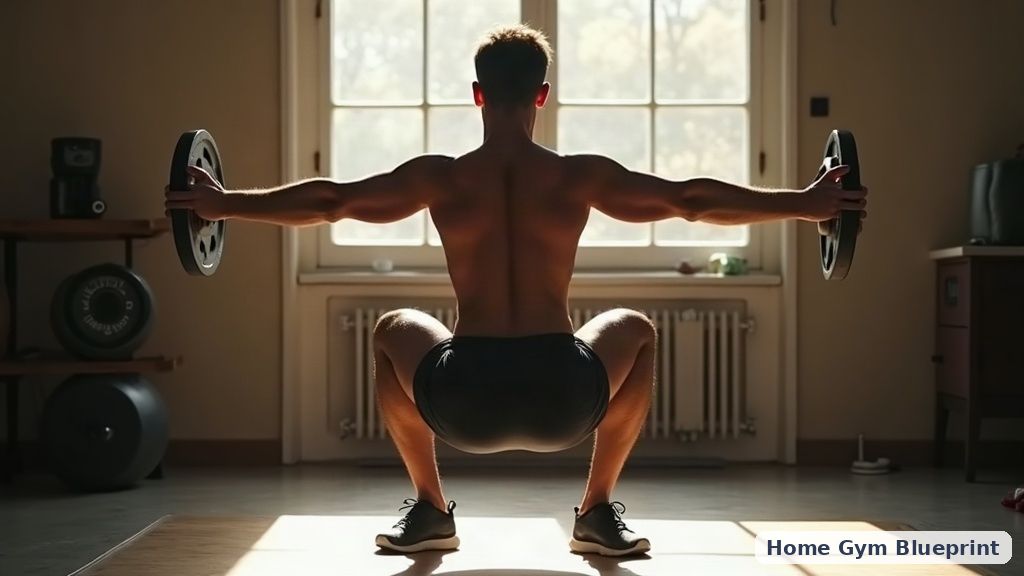
Do this in order. No rest between exercises. Total time: about 5 minutes.
| Minute | Move | Reps/time |
|---|---|---|
| 0:00–1:00 | Light cardio (jumping jacks / high knees / jog in place) | 60 sec |
| 1:00–1:45 | Arm circles (forward + backward, big and slow) | 10 each way |
| 1:45–2:30 | Hip circles (hands on hips, big open circles) | 8 each way |
| 2:30–3:15 | Bodyweight squats (deep, slow, controlled) | 10 reps |
| 3:15–4:00 | Bird-dog (opposite arm/leg reach on all fours) | 6 per side |
| 4:00–5:00 | Warm-up sets of your first lift, empty bar / light DB | 2 sets × 8 reps |
The last minute is the most important and the one most people skip: the first working lift should not be your first heavy rep. Do a lighter set of the same movement first. Squats today? Two sets of bodyweight or empty-bar squats before you load up.
Why bodyweight squats before dumbbell squats?
Because you’re teaching your body the pattern under low load first. The knees, hips, and lower back all get to move through the exact range they’ll do heavy, but with almost no weight. This is progressive overload’s little cousin — progressive preparation. It’s the same idea behind the dumbbell progression guide, just applied within a single session.
Do I need to warm up if I’m doing light dumbbells anyway?
Yes, still — because “light” is relative to your working sets, not to your cold body. A 15 lb dumbbell overhead press is heavy for a shoulder that hasn’t rotated once yet. A short warm-up is even more important on lighter days, actually, because you’re more likely to be dismissive about form.
What about after? Static stretching, foam roller?
Post-workout is where those actually shine. A cool-down of gentle static stretches for the muscles you worked helps recovery and mobility over time. Foam rolling tight areas post-lift also has its place. Just not before — save the passive stuff for when your session is done.
📚 Related In-Depth Analysis
- Compare findings with our guide on How Much Weight Do You Need Home Gym.
- Compare findings with our guide on Best Adjustable Dumbbells Home Gym.
📚 Related In-Depth Analysis
- Compare findings with our guide on How Much Weight Do You Need Home Gym.
- Compare findings with our guide on Foldable Weight Bench.
🔧 Interactive Planning Tool
Need exact measurements for your setup? Use our Gym Floor Clearance & Cable Arc Estimator to Estimate ceiling height clearance and lateral plate-loading space required.
The bottom line
Five minutes, no equipment, one rule: general → specific. General movement (cardio, arm circles, hip circles, squats, bird-dog) → then a specific warm-up set of your first lift with light weight. Skip the static stretching and foam rolling until after your session. It sounds too small to matter — right up until the day you tweak your back on set one because you didn’t do it. This is the cheapest injury insurance in your entire home gym. ession. It sounds too small to matter — right up until the day you tweak your back on set one because you didn’t do it. This is the cheapest injury insurance in your entire home gym.