Dumbbell Weight Progression: How to Keep Getting Stronger at Home (2026)
As an Amazon Associate I earn from qualifying purchases. Prices and availability are accurate as of the date/time indicated and are subject to change.
🔍 How this guide was put together (Editorial Standards)
This guide compares options using published manufacturer specifications, patterns in publicly visible owner reviews, and reputable expert sources. We do not operate a physical testing lab; see our how-we-research page for details.
EDITOR'S PICKS
Top Picks

The most common reason home lifters stop making progress isn’t effort — it’s that they lift the same weight for the same reps week after week. Muscles adapt to a stimulus and then stop changing unless the stimulus increases. That principle is called progressive overload, and the good news is that “add weight” is only one of several ways to apply it at home. Here’s how to keep gaining without a commercial gym’s rack of plates.
Progressive overload, in plain terms

Your body builds muscle and strength in response to doing more than it’s used to. “More” can be more weight, more reps, more sets, better range of motion, slower tempo, or shorter rest. You don’t need to add load every session — you need to add something over time. This is also why you can build real muscle with just dumbbells: the tool matters less than steadily increasing the demand.
The progression ladder (use these in order)
| Lever | How to apply it | When to use |
|---|---|---|
| Reps | Add 1–2 reps per set weekly | First lever — before adding weight |
| Sets | Add a set to a lift | When reps top out (e.g. 3×12) |
| Weight | Increase load, drop reps back down | When you hit the top of your rep range |
| Tempo | Slow the lowering phase (3–4s) | When you can't add weight yet |
| Rest | Shorten rest between sets | For conditioning / density |
| Range of motion | Deeper, fuller reps | Always — quality over ego |
The classic method is double progression: pick a rep range (say 8–12). Add reps each week until you hit 12 on all sets, then increase the weight and drop back to 8. Repeat. It’s simple, auto-regulating, and works for years.
Why do I need adjustable dumbbells for this?
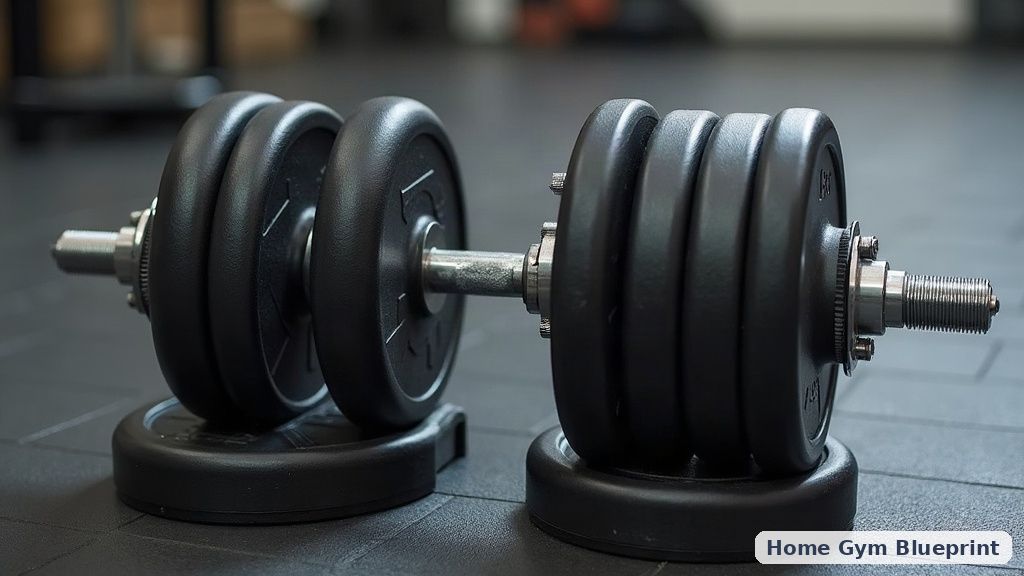
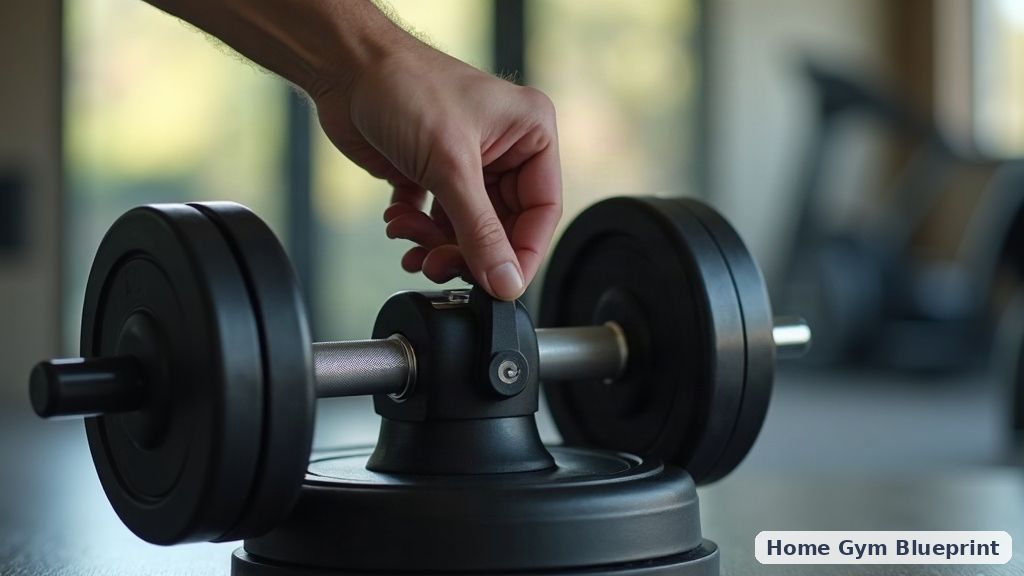
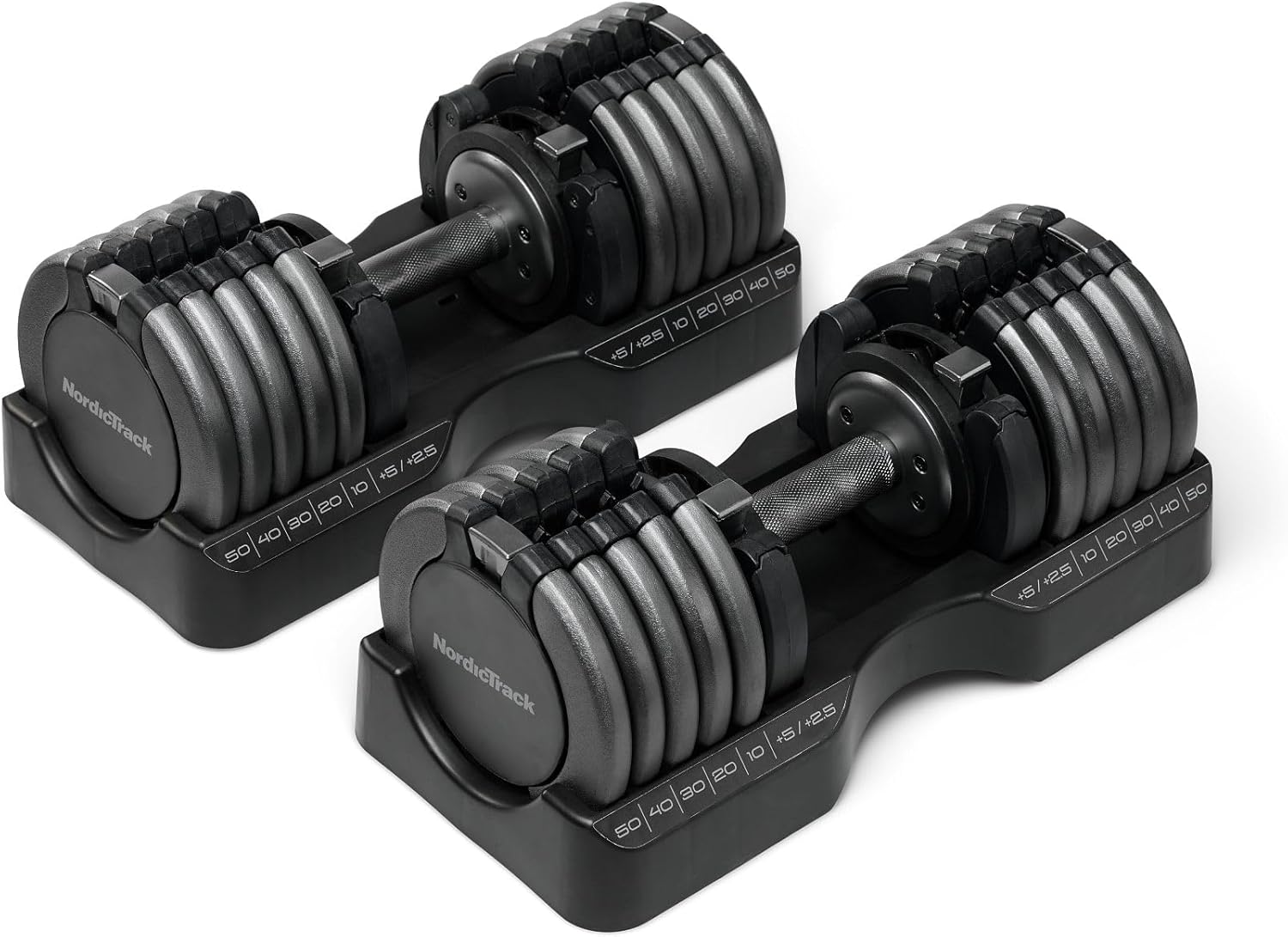
Because progression needs small, frequent jumps. A fixed pair of dumbbells forces a huge leap — from, say, 20 lb straight to 25 lb (a 25% jump) — that’s too big for many lifts, especially upper body. Adjustable dumbbells give you closely spaced increments across a wide range in one compact unit, so you can nudge the weight up 2.5–5 lb when you’re ready. That’s the whole reason they’re the backbone of a home setup; our adjustable dumbbell guide compares the options, and they pair naturally with a bench to unlock more lifts.
How do I know when to add weight?
Use the top of your rep range as the trigger: when you can complete every set at the top (e.g. all sets of 12) with 1–2 reps still in reserve and good form, go up. If your form breaks or the last reps grind to failure, hold the weight and add reps or clean up technique first. Chasing weight before you own the current load is how injuries and plateaus both happen.
What happens when dumbbells get too light?
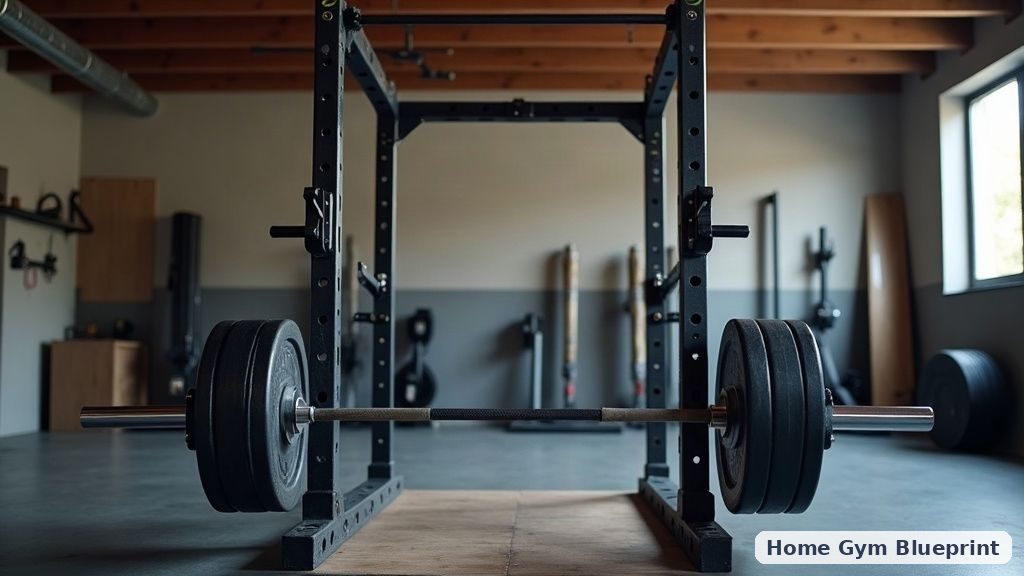
Eventually some lifts (rows, goblet squats, deadlifts) outgrow even heavy dumbbells. That’s the point to add a barbell and power cage for the big compound lifts, keeping dumbbells for accessories. Knowing how much weight you actually need helps you plan the jump before you stall.
📚 Related In-Depth Analysis
- Compare findings with our guide on How Much Weight Do You Need Home Gym.
- Compare findings with our guide on Kettlebell Vs Dumbbell.
📚 Related In-Depth Analysis
- Compare findings with our guide on How To Protect Concrete Floor Heavy Power Rack.
- Compare findings with our guide on Foldable Weight Bench.
🔧 Interactive Planning Tool
Need exact measurements for your setup? Use our Gym Floor Clearance & Cable Arc Estimator to Estimate ceiling height clearance and lateral plate-loading space required.
The bottom line
Getting stronger at home is about progressive overload, not just heavier weights: add reps, then sets, then load — using double progression (fill a rep range, then bump the weight). Adjustable dumbbells make the small increments possible; a bench and eventually a barbell extend the runway. Track your lifts so you can see the “more” happening — if the numbers never move, neither will you.